Lots of plants are bloomin’ at Bloomin’ Things. Are you ready to test your bloomin’ knowledge?
Find out how green your thumbs are by naming the blossoms below. Try to name them without assistance if you can. The answers are below.
🔍 Hint 1
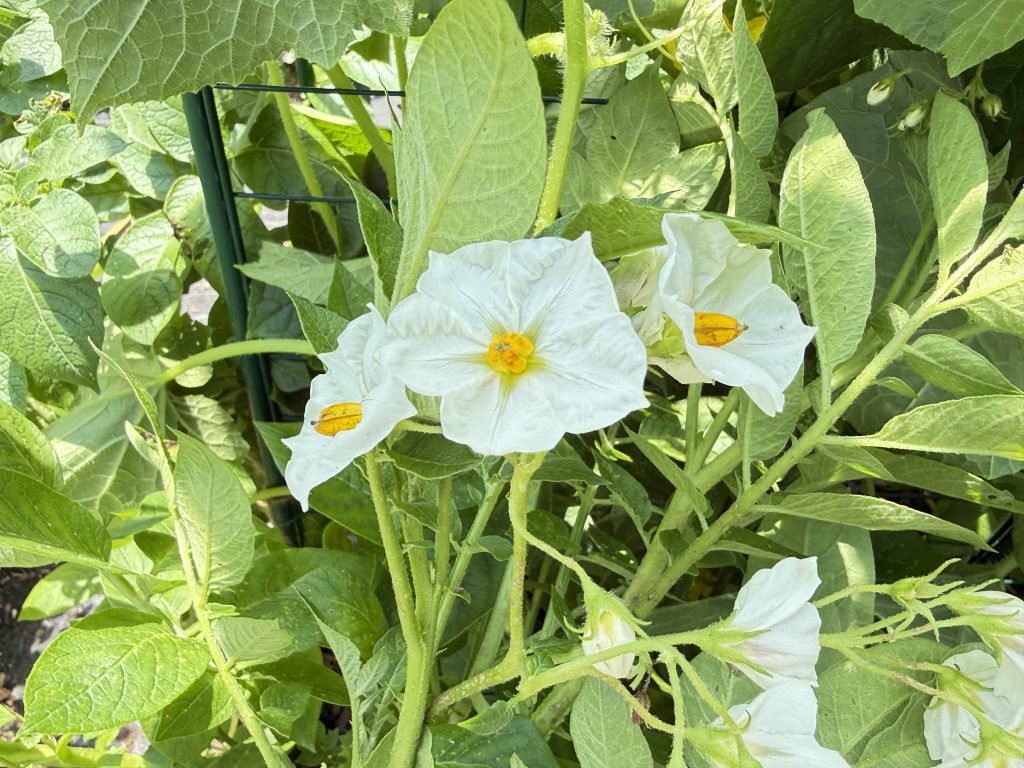
These pretty flowers aren’t just ornamental—they’re a clue you’re growing one of tomatoes’ closest relatives! While bees happily visit the blossoms, the real treasure is growing underground.
🔍 Hint 2
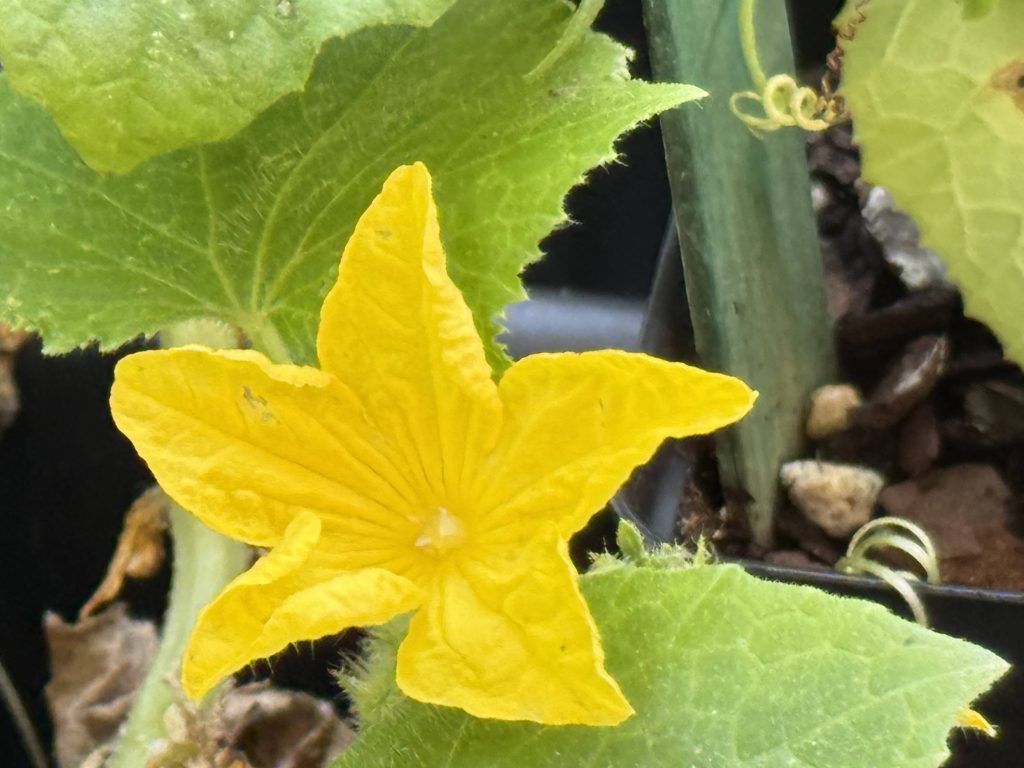
This plant has two different kinds of blossoms, each with a special job.
🔍 Hint 3
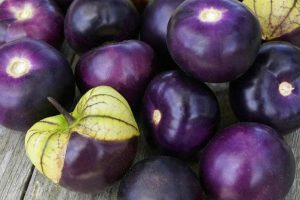
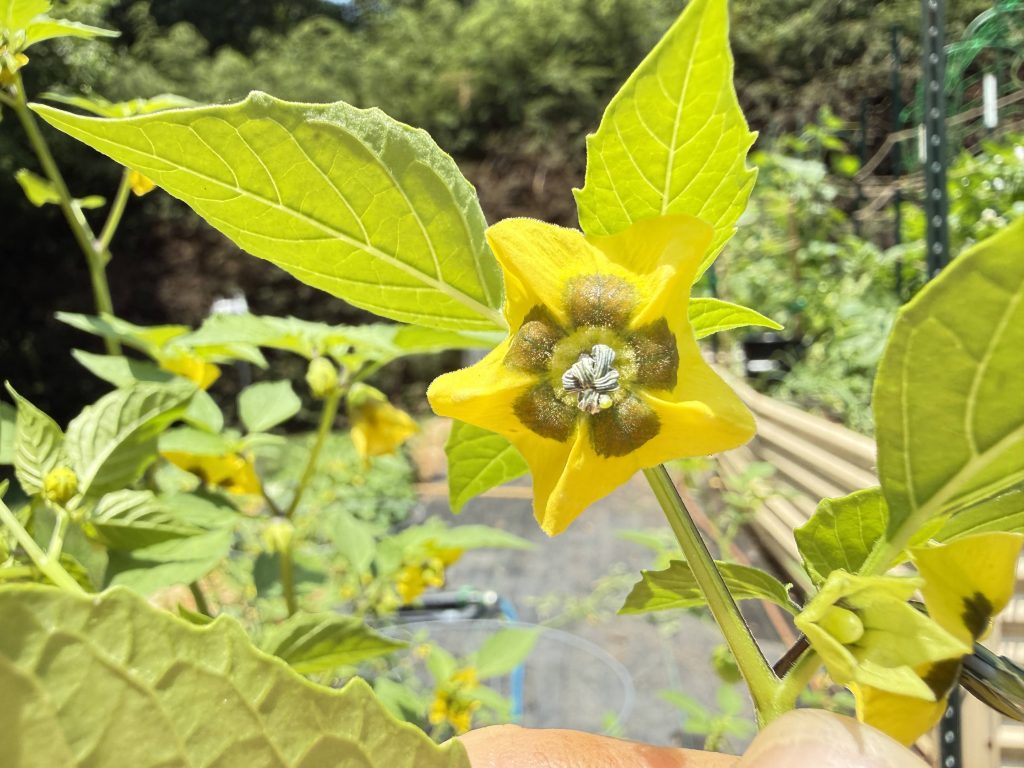
This blossom belongs to a plant whose fruit wears its own natural wrapper.
🔍 Hint 4
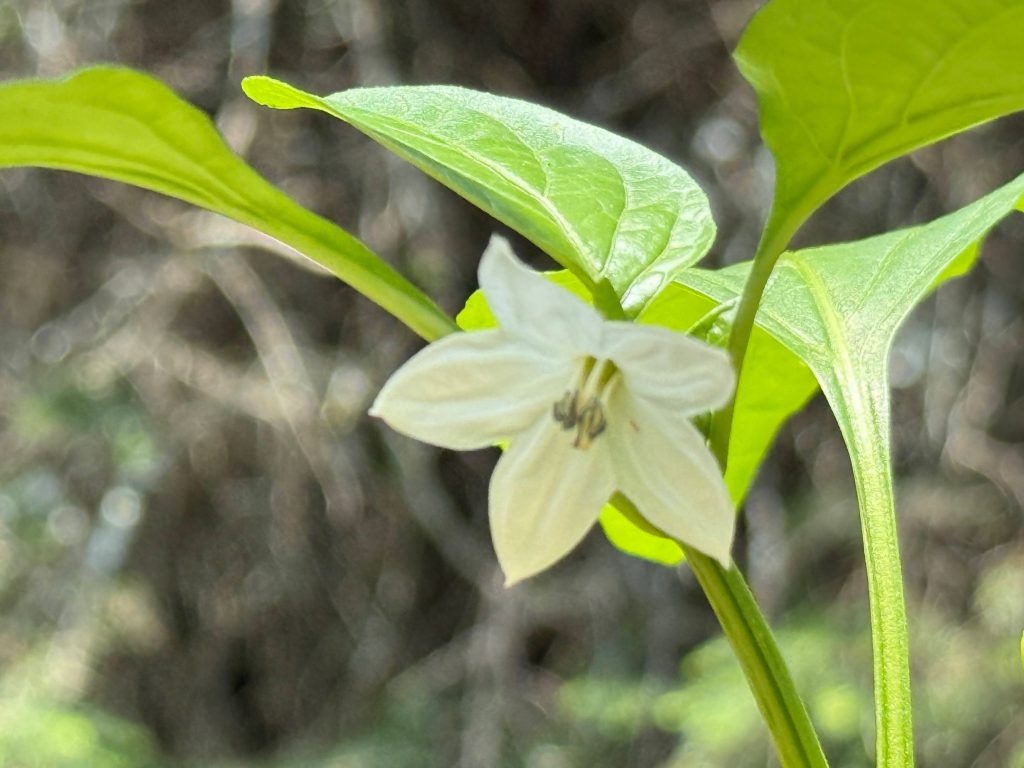
This blossom may be small and simple, but it can grow into something sweet, smoky, or seriously spicy!
🔍 Hint 5
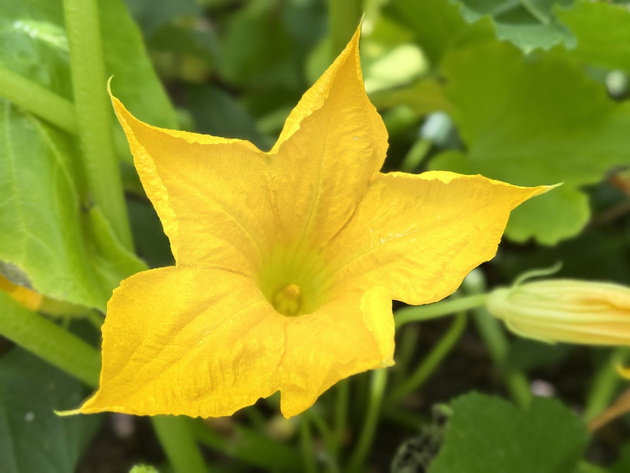
This blossom opens at sunrise and often closes before lunchtime. If the bees sleep in, so does the harvest!🌱
So how did you do? Here’s the answer key, and a few fun facts for each
ANSWERS:
#1 – POTATO
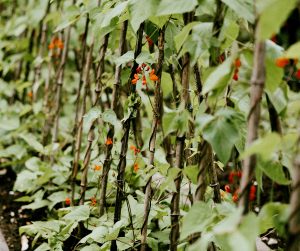
#2 – CUCUMBER
#3 – TOMATILLO
#4 – PEPPER
#5 – SUMMER SQUASH
So now that your bloomin’ knowledge was tested, here are some interesting tidbits about these veggie plants. A general nod to all of them is the fact that they’re some of the most abundant producing plants in the world.
POTATOES
🌸 Fun Facts
A healthy potato plant may produce beautiful white, pink, purple, or blue-violet blossoms, depending on the variety. Some heirloom potatoes are grown as much for their gorgeous flowers as for their harvest!
Potato flowers and tomatoes are close cousins! They’re both members of the Nightshade family, which is why their blossoms look so similar. In fact, if you’ve ever mistaken a potato flower for a tomato flower, you’re in good company!
🐝Pollinator Perks
Although potatoes grow underground, their flowers are a valuable source of pollen for bumblebees and other native bees. Bumblebees use buzz pollination—vibrating the flower to shake loose pollen—a technique they also use on tomatoes, peppers, and eggplants.
🥔 Did You Know?
After flowering, some potato plants produce small green fruits that look like tiny tomatoes. These are called potato berries. Don’t eat them! They contain high levels of solanine and are toxic to people and pets.
🌎 Rooted in History
Potatoes were first domesticated in the Andes Mountains of South America more than 7,000 years ago. Today, there are thousands of potato varieties grown around the world, making the humble potato one of the world’s most important food crops.
CUCUMBERS
🌼 Fun Facts
Cucumber plants produce male and female flowers. The female flower has a tiny baby cucumber at its base, while the male flower grows on a thin stem. Once pollinated, that tiny cucumber begins to grow!
🥒 Did You Know?
Don’t panic if your plant drops lots of flowers early in the season! Those are usually male flowers, which bloom first to attract pollinators before the female flowers begin producing cucumbers.
🐝Pollinator Perks
- Not every cucumber needs pollination! Some varieties are parthenocarpic, meaning they produce seedless fruits without pollination. They’re especially popular for greenhouse growing.
- Morning Magic:Cucumber flowers open early in the day when pollinators are most active. By afternoon, many blossoms have already begun to close.
🌎 Rooted in History
- Cucumbers have been cultivated for more than 3,000 years! They originated in India and spread along ancient trade routes to the Middle East, Europe, and eventually the Americas.
- One of the world’s oldest vegetables, cucumbers were prized by ancient Egyptians, Greeks, and Romans for their refreshing flavor and ability to thrive in warm climates.
Tomatillos
🌧️Fun Facts
- Tomatillos grow inside their own natural wrapper! As the fruit develops, the papery husk expands with it, acting like a built-in protective package until harvest. This is one reason tomatillos are often such dependable producers.
- That papery “lantern” around each tomatillo isn’t just for looks! It protects the developing fruit from insects, intense sun, and heavy rain while allowing air to circulate, helping the fruit mature safely inside. The lanterns may later help with seed dispersal by wind or water.
🐝Pollinator Perks
- Tomatillos have nectar guides that help pollinators find the flower.
- It relies on bees, especially buzz-pollinating bees, to move pollen efficiently.
- If often benefits from cross-pollination, increasing genetic diversity and fruit production.
- After pollination, the calyx grows into a papery lantern, protecting the developing fruit.
🌱 Did you know?
A tomatillo is usually ready to harvest when it has filled the husk so completely that the papery covering splits open. Nature tells you when it’s time!
🌎 Rooted in History
Tomatillos have been grown in Mexico for centuries and were an important food crop of the Aztec civilization. Their name comes from the Spanish word tomate, meaning “little tomato.” Despite the name, tomatillos aren’t actually “little tomatoes.” They’re their own species in the Physalis genus, which is why they have that distinctive papery husk.
Peppers
🌶️ Fun Facts
Each pepper blossom has the potential to become exactly one pepper. The healthier the flower and the better the pollination, the better your chances of harvesting a beautiful fruit.
🐝 Pollinator Points
Most pepper flowers are self-pollinating, meaning each blossom contains both male and female parts. A gentle breeze is often enough to move pollen, but bees can boost pollination too—especially by vibrating the flowers, a technique known as buzz pollination.
Although peppers don’t depend heavily on bees, visits from bumblebees and other native bees can increase the number, size, and quality of peppers by improving pollination.
🌼 Did you Know?
Most pepper plants produce white blossoms, but some varieties bloom with beautiful purple, lavender, or even greenish-white flowers. In many ornamental peppers, the flower color hints at the color of the stems or fruit.
🌎 Rooted in History
Peppers originated in Central and South America, where they were cultivated thousands of years before they spread around the world. Today, there are thousands of varieties—from sweet bell peppers to some of the hottest peppers on Earth.
Summer Squash
🌼 Fun Facts
Each squash blossom usually opens for just one morning. If it isn’t pollinated that day, it closes and won’t reopen. That’s why bee activity early in the morning is so important.
Squash blossoms are edible! Male flowers are often harvested for cooking because removing them doesn’t reduce your harvest. They’re delicious stuffed with cheese, lightly battered, or added fresh to salads.
🍃 Did you Know?
Summer squash plants produce both male and female flowers. The female blossom has a tiny squash at its base, while the male grows on a long, slender stem. Without pollination, that tiny squash won’t develop.
🐝 Pollinator Facts
Nature has its own early shift! Squash blossoms depend on bees—especially squash bees, which emerge before sunrise and specialize in pollinating squash, pumpkins, and gourds. They’re among the earliest bees you’ll see working in the garden. Squash blossoms open before sunrise to welcome these most important pollinators which begin foraging before most other bees are even awake.
That little partnership between the flower and the squash bee is one of the coolest examples of coevolution in the vegetable garden. It’s the kind of fact that tends to stick with people long after they’ve read it. 🌼🐝
🌎 Historical Roots
Summer squash has been cultivated in the Americas for thousands of years. Indigenous peoples were growing squash long before European settlers arrived, making it one of North America’s oldest cultivated crops.